Bone Grafting & Sinus Lift — Preparing for Successful Implants
Preparatory bone grafting and sinus lift procedures to ensure successful dental implant placement for patients with insufficient bone density.
Price varies by case complexity. Quoted during consultation.
What's Included
Building the Foundation for Successful Dental Implants
A dental implant needs a solid foundation of healthy jawbone to succeed. But when teeth have been missing for months or years, the jawbone in that area naturally shrinks and thins — a process called resorption. Advanced gum disease, trauma, and certain medical conditions can also reduce bone volume. When insufficient bone exists to anchor an implant securely, bone grafting or a sinus lift provides the solution.
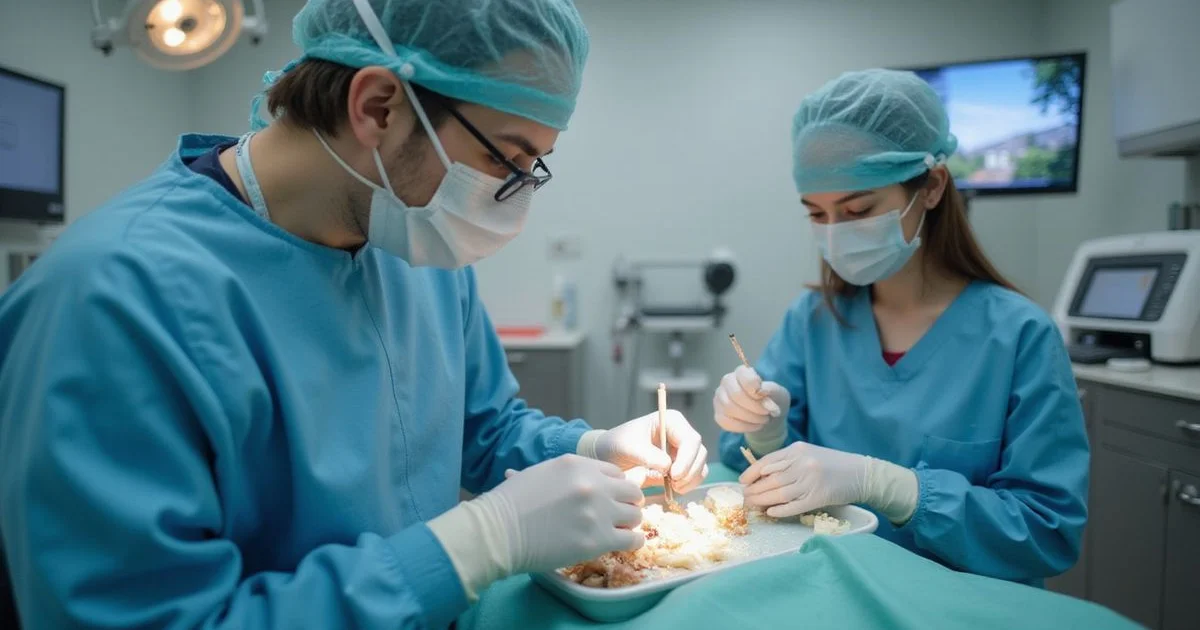
At our clinic in Playa del Carmen, our surgical team performs bone augmentation procedures routinely, using biocompatible graft materials and advanced techniques to rebuild the jawbone and create the conditions for long-lasting implant success. With bone grafting procedures starting from $500 USD, our patients access the same quality of surgical care available at top US clinics while saving significantly.
These procedures are an investment in the success of your dental implants — and when performed by experienced specialists using quality materials, they make the difference between an implant that lasts a lifetime and one that fails prematurely.
Understanding Bone Loss in the Jaw
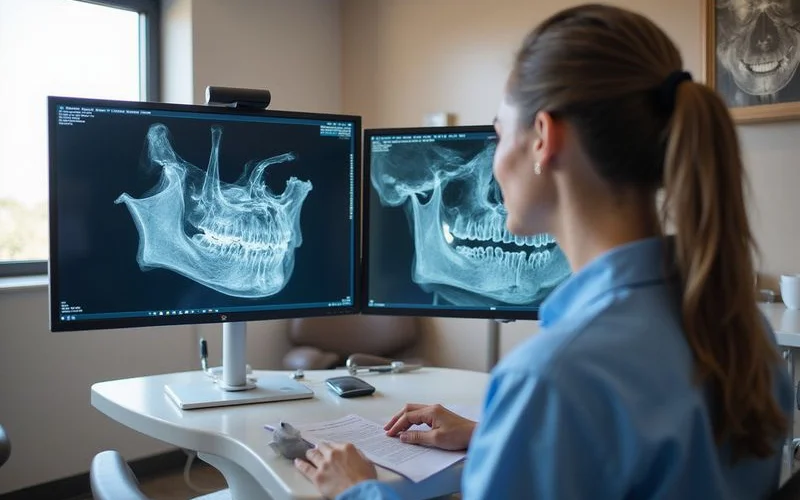
The jawbone maintains its volume and density through the stimulation it receives from the roots of your teeth during chewing. When a tooth is lost, that stimulation disappears, and the body begins to resorb (break down) the bone in that area. This process is predictable and progressive:
Within 6 months of tooth loss, the bone at the extraction site may lose 25% or more of its original width.
Within 1-3 years, significant vertical and horizontal bone loss occurs, potentially leaving too little bone for standard implant placement.
After 5+ years, the bone loss can be severe enough to change the shape of your face, creating a sunken appearance around the cheeks and lips.
This is why dentists often recommend either immediate implant placement after extraction or socket preservation grafting to maintain bone volume. However, if bone loss has already occurred, it can be rebuilt through grafting procedures before or during implant placement.
Types of Bone Grafting Procedures
Our surgical team selects the most appropriate grafting technique based on the location and extent of bone loss, the type of implant planned, and your overall health.
Socket Preservation Graft
When a tooth is extracted, a socket preservation graft fills the empty socket with bone graft material immediately after removal. This prevents the rapid bone loss that normally follows extraction and preserves the bone volume needed for a future implant. This is one of the most predictable and least invasive grafting procedures.
Best for: Patients having a tooth extracted who plan to receive an implant in the near future.
Ridge Augmentation (Horizontal or Vertical)
When the jawbone ridge has already narrowed or shortened due to past tooth loss, a ridge augmentation graft rebuilds the bone to its proper dimensions. Graft material is placed on the deficient area and secured with a resorbable membrane that protects the graft during healing.
Horizontal augmentation widens a narrow ridge — common when teeth have been missing for a year or more.
Vertical augmentation increases the height of bone — a more complex procedure needed when significant resorption has occurred.
Best for: Patients with moderate to severe bone loss who need to rebuild the ridge before implant placement.
Block Bone Graft
For cases with very significant bone loss, a block of bone may be harvested from another area of the jaw (usually the chin or the back of the lower jaw) and secured to the deficient area with small titanium screws. This approach is used less frequently today thanks to advances in synthetic and allograft materials, but it remains an option for the most challenging cases.
Best for: Patients with severe, localized bone deficiency where other approaches may not provide sufficient volume.
Understanding Sinus Lift Surgery
A sinus lift (also called sinus augmentation or sinus floor elevation) is a specialized procedure for patients who need implants in the upper back jaw (premolar and molar area) but lack sufficient bone height between the jawbone and the maxillary sinus.
Why Is a Sinus Lift Needed?
The maxillary sinuses are air-filled cavities that sit above the upper back teeth. When upper molars are lost, the sinus floor tends to drop downward into the space previously occupied by the tooth roots, and the bone between the sinus and the oral cavity thins. Without adequate bone height, an implant could penetrate through the bone into the sinus — a complication that must be avoided.
A sinus lift gently raises the sinus membrane upward and fills the space beneath it with bone graft material, creating enough bone height to securely anchor implants.
The Sinus Lift Procedure
Step 1 — Assessment. A 3D CT scan precisely measures the available bone height and maps the anatomy of the sinus. This allows the surgeon to plan the exact approach and graft volume needed.
Step 2 — Access. A small window is created in the lateral wall of the sinus (or, in some cases, through the implant site itself using the osteotome technique for a less invasive approach).
Step 3 — Membrane Elevation. The sinus membrane is gently lifted away from the bone floor using specialized instruments. This is the most delicate step and requires experienced hands to avoid perforating the membrane.
Step 4 — Graft Placement. Bone graft material is packed into the space between the elevated membrane and the sinus floor, creating a new, thicker layer of bone.
Step 5 — Closure and Healing. The access site is closed with sutures. Over the next 4-9 months, the graft material integrates with your natural bone, forming solid tissue ready for implant placement.
Bone Graft Materials We Use
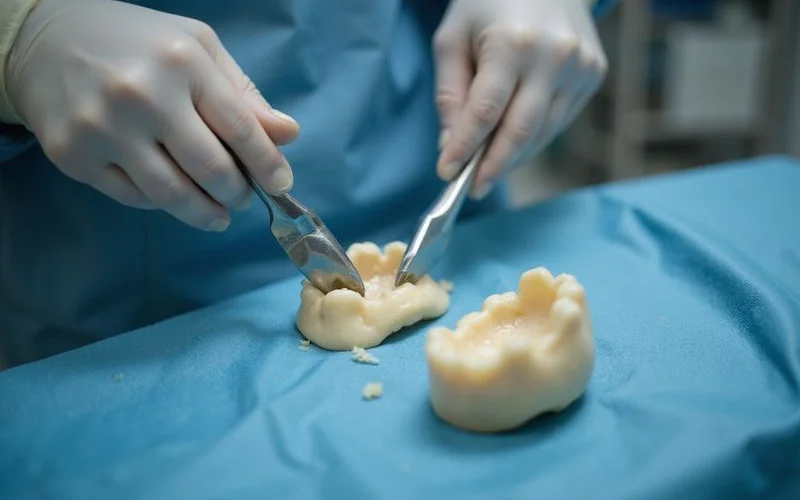
The choice of graft material depends on the type and extent of augmentation needed. We use only biocompatible materials from trusted manufacturers:
Xenograft (Bovine Bone) — Processed bone mineral derived from bovine sources. The organic components are completely removed, leaving only the mineral scaffold. This material is an excellent framework for new bone growth and is the most commonly used graft material worldwide. Brand examples: Bio-Oss, Cerabone.
Allograft (Human Donor Bone) — Processed bone from human tissue banks. Rigorously screened and sterilized, allografts provide natural human bone matrix that supports bone regeneration.
Synthetic Graft (Alloplast) — Man-made materials such as hydroxyapatite, beta-tricalcium phosphate (TCP), or calcium sulfate. These materials are completely synthetic with zero disease transmission risk and provide reliable scaffolding for new bone growth.
Autograft (Your Own Bone) — Bone harvested from another area of your body (typically the chin or jaw). Autograft is considered the gold standard because it contains living bone cells that actively promote regeneration. However, it requires a second surgical site, so it is reserved for cases where other materials may not be sufficient.
In many cases, a combination of materials is used to optimize the healing environment.
Cost Comparison: Bone Grafting in Mexico vs. the US
| Procedure | US Price | Canada Price | Our Price | Savings |
|---|---|---|---|---|
| Socket preservation graft | $500 - $1,500 | $400 - $1,200 CAD | From $300 | Up to 40% |
| Ridge augmentation (localized) | $1,500 - $3,000 | $1,200 - $2,500 CAD | From $500 | Up to 67% |
| Sinus lift (lateral approach) | $2,000 - $4,000 | $1,800 - $3,500 CAD | From $800 | Up to 60% |
| Sinus lift (osteotome/crestal) | $1,000 - $2,500 | $900 - $2,000 CAD | From $500 | Up to 50% |
| Block bone graft | $3,000 - $6,000 | $2,500 - $5,000 CAD | From $1,200 | Up to 60% |
| GBR membrane | $300 - $800 | $250 - $700 CAD | From $150 | Up to 50% |
Note: These procedures are often performed in conjunction with dental implant placement or as a preparatory step. Total treatment costs are quoted during your consultation based on your specific needs.
What to Expect: Recovery and Healing Timeline
Bone grafting and sinus lift procedures are well-tolerated by most patients. Understanding the recovery process helps you plan accordingly.
Immediately After Surgery
Some swelling and mild discomfort are normal for the first 2-3 days. We prescribe pain medication and antibiotics to ensure comfort and prevent infection. Ice packs applied to the outside of the face reduce swelling effectively.
First Week
Swelling peaks around day 2-3 and then steadily decreases. You should eat soft foods, avoid blowing your nose forcefully (especially after a sinus lift), and refrain from strenuous exercise. Most patients feel significantly better by day 5.
First Month
The surgical site continues to heal. Sutures dissolve or are removed at your follow-up appointment. You can gradually return to normal eating and activities.
4-9 Months
The bone graft integrates with your natural bone in a process similar to osseointegration. The timeline varies depending on the type and extent of grafting. A CT scan at the appropriate milestone confirms adequate bone formation, and implant placement can then be scheduled.
Planning Your Bone Grafting Trip
For dental tourists, bone grafting is typically performed during an initial visit to Playa del Carmen, with implant placement scheduled as a separate trip several months later once the graft has healed.
Trip 1 (3-5 days): Consultation, CT scan, bone graft or sinus lift procedure, and a post-operative check before you fly home.
Healing Period (4-9 months at home): The graft integrates with your natural bone. We monitor progress through photos and X-rays you send via WhatsApp.
Trip 2 (5-7 days): Return for implant placement once the graft has fully healed. A CT scan confirms the bone is ready.
Trip 3 (2-3 days, optional): Return for permanent crown placement after the implant integrates (an additional 3-6 months). Some patients combine this with crown delivery from other procedures.
We understand this is a longer process than a simple implant case, and we plan the timeline carefully so each trip is productive and efficient.
Are You a Candidate for Bone Grafting?
You may need bone grafting before implants if:
- Teeth have been missing for more than a year
- You have a history of periodontal (gum) disease
- You wore dentures for many years, which can accelerate bone loss
- A previous extraction was traumatic and resulted in bone loss
- Your CT scan shows insufficient bone height or width for implants
- You need upper back implants where the sinus is too close to the jawbone
Our team evaluates your bone volume during the initial consultation using 3D CT imaging. If sufficient bone exists, grafting may not be needed and you can proceed directly to dental implant placement. For patients needing full arch restoration, the All-on-4 technique is specifically designed to maximize existing bone and often eliminates the need for grafting.
Schedule Your Bone Grafting Consultation
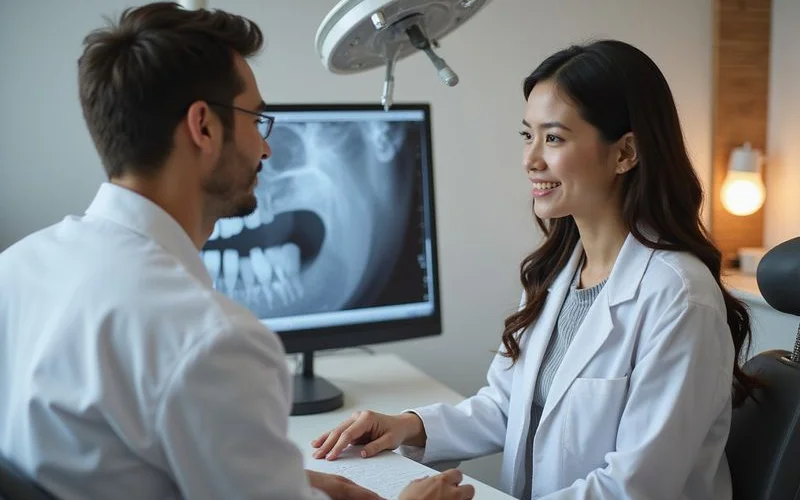
The first step is a thorough evaluation of your jawbone using 3D CT imaging. Send us your existing X-rays or CT scan via WhatsApp, and our surgical team can provide a preliminary assessment and cost estimate before you travel.
Get Your Free Bone Grafting Assessment on WhatsApp — We respond in under 2 hours.
Related Services
All-on-4 / All-on-6 Full Arch Restoration
Complete full arch tooth replacement using the All-on-4 or All-on-6 implant technique — a permanent, fixed solution for patients with extensive tooth loss.
From $8,500
Dental Implants
Permanent tooth replacement with titanium implants, custom abutments, and premium crowns — all from board-certified implantologists.
From $1,200
Ready to Get Started?
Contact us for a free, no-obligation quote. We respond within 2 hours.
Get Free Quote on WhatsApp